
Мощность излучения Wi-Fi, Bluetooth и гигиена сна
- Информация о материале
- Автор: Super User
- Родительская категория: Заметки
- Категория: Экология
- Просмотров: 1889
Рейтинг: 1 / 5


Wi-Fi: Up to 5 watts; typically 1-3 watts. Some intrepid users have boosted it to 60+ watts, but that's very far out of specification.
Bluetooth Classic: 1 watt
Bluetooth Low-Energy (also called "Bluetooth Smart"): 0.5 watts (but more typically, 0.01 watts)
ANT+: 0.183mW, or 1.83*10^-7 watts, or .000000183 watts.
Getting better sleep helps you heal from all the stressors you experience during the day that are out of your control.
* Turn off the wifi router at night.
* Get rid of your microwave.
* Keep your phone in airplane mode at night, particularly if you keep it near your body like I do as an alarm.
* Measure for dirty power in your house; if found, install filters on the plugs in the rooms in which you sleep (a lengthy post on its own)
* Sleep in your basement instead of upstairs. Higher-frequency radiation has trouble traveling through dirt, rocks, and water.
* Cover up or remove all sources of light at night in your bedroom so it's pitch-black.
* Use blackout curtains in the bedroom.
* Keep electronics out of the bedroom: sleep, sex, and maybe reading only in that room.
* Wake up at the same time every day using an alarm that senses when you are already awake (I use "Sleep Cycle" on my iPhone)
* Barring waking up at the same time, go to sleep at the same time every night. Learn to burn the candle at only one end!
They are all little effects on their own, but ever since I started practicing more sound "sleep hygiene" by implementing a number of these together, my quality of sleep and ability to recover from stress have both increased tremendously.
People should realize that Bluetooth devices that fit in or around the ear typically radiate at 0.23 watts per kilogram (W/Kg). Go into any AT&T wireless store and ask for the SAR on Bluetooth devices. Or check any SAR values website that shows cell phone SAR levels, and you’ll find the Bluetooth devices are actually worse than some of the low-SAR cell phones.
This level of 0.23 W/Kg is ten to 100 times higher than the RF exposure levels shown to make the blood-brain barrier pathologically leaky, allowing toxins and toxic molecules to cross the BBB. This is reported by Salford, Persson, NIttby and Schirmacher among others – to cause neuron death at 0.012 to 0.002 W/Kg.
Multiple studies have reported that as short as a single, two-hour exposure to cell phone radiation will result in pathological leakage of the blood-brain barrier. The effect occurs immediately, and is still seen at 14 days and at 50 days post-exposure at only 0.012 W/Kg to 0.002 W/Kg. The lowest exposure SARs are worse than the higher SAR exposures (Nittby et al, 2009). These studies show neuron death (brain cells) at SARs of only 0.012 W/Kg. Bluetooth devices are worn for hours at a time, in some cases – all day long. So, it is reasonable to conclude that a device which radiates at a higher intensity than some cell phones that are still risky in terms of SAR, worn for more hours than a cell phone is typically used – would not be a good idea to promote.
Špatné ovzduší v Brně
- Информация о материале
- Автор: Super User
- Родительская категория: Заметки
- Категория: Чехия
- Просмотров: 1655

Press-Kristensen potvrdil, že hodnoty jsou zde horší než na srovnatelných lokalitách v Berlíně, Kodani nebo Miláně.
„Zaznamenali jsme vysoké znečištění blízko škol a školek, na autobusové zastávce, ale i během jízdy autobusem MHD nebo autem ulicemi Brna,“ shrnul Press-Kristensen.
Jen pro srovnání: zatímco ve volné přírodě zjistil Dán přibližně 1 500 částic ultrajemného prachu na centimetr krychlový vzduchu, brněnský Úvoz měl 75 000 částic.
Tyto částice jsou přitom poměrně nebezpečné. Pronikají hluboko do plic a podílí se na vzniku onemocnění srdce a cév, mají vliv na riziko infarktu nebo mozkové mrtvice.
„Ultrajemné částice prachu vznikají ve spalovacích motorech automobilů a jejich významným zdrojem ve městech jsou vozidla s dieselovými motory,“ uvedl Miroslav Šuta z Centra pro životní prostředí a zdraví.
Zdroj:
PM 2.5 сенсоры
- Информация о материале
- Автор: Super User
- Родительская категория: Заметки
- Категория: Экология
- Просмотров: 1602
SDS 021

UART синхронный и асинхронный
- Информация о материале
- Автор: Super User
- Родительская категория: Заметки
- Категория: Электроника / cхемотехника
- Просмотров: 4844
Синхронный режим UART отличается от асинхронного только тем, что в синхронном режиме частота синхронизации UART подается извне, от другого устройства с UART по дополнительной линии (дополнительной к сигналам TxD и RxD). А при асинхронном режиме частота тактирования UART вырабатывается внутри МК и она в общем случае несинхронизирована с тактовой частотой того другого UART. Но в обоих случае функционал UART от способа синхронизации не меняется. UART всегда работает как асинхронный приемопередатчик, синхронизируясь на приеме символов по сигналу в линии RxD. См. Figure 80, на нем все отличие синхронного и асинхронного режимов UART. Так что если на линии RxD нет перепада 1->0, то UART не будет детектировать старт-бит и никакого приема не будет в любом из режимов.
()
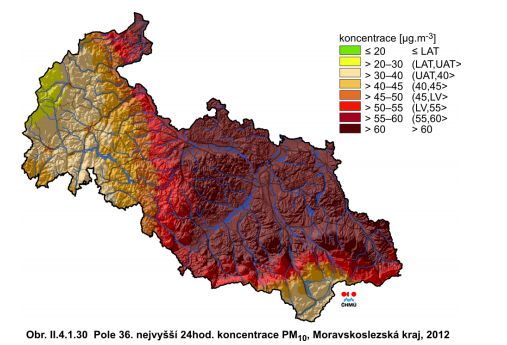
В Чехии очень грязный воздух
- Информация о материале
- Автор: Super User
- Родительская категория: Заметки
- Категория: Экология
- Просмотров: 1465
Знакомьтесь:
Не говорите, что вас не предупреждали!
Страница 115 из 197